Bird watching Tours in Monteverde Area, Costa Rica — Quetzals, Cloud Forest & Curi-Cancha Reserve
Listen to the hammer-ring of the three-wattled bellbird echoing across the misty canopy on the bird watching tours Monteverde's cloud forest is famous for — your naturalist guide already has the quetzal in the scope. Rated 4.7 to 5 stars, binoculars included, free cancellation on all tours.
Bird watching tours in Monteverde run 2 to 5 hours and cost $40 to $90 per person, with binoculars, a spotting scope and a naturalist guide included. Most of them work Curi-Cancha Reserve, an 83-hectare private wildlife refuge with seven kilometres of trail, and the reserve most birders name first for the resplendent quetzal and the three-wattled bellbird. Departures are at dawn because the birds feed and call hardest in the first two hours of light.
Prices sit between $40 and $90; the difference is guide-to-birder ratio and hours in the field, not the reserve
Curi-Cancha also sells self-guided entry at $25, so a guided morning buys the eyes and the scope rather than the gate. See what a guide actually adds
Staying for the dawn start? Guests' top-rated Monteverde rooms begin at $74 a night → see hotels
2 to 5 hours
Binoculars included
Free cancellation
Rated 4.7–5.0 ★
$40Tours from
★5.0Top tour rating
200+Verified reviews
400+Cloud forest species
best tour
The Monteverde Birdwatching Tour Travelers Recommend Most
Monteverde: Bird Watching Tour in the Curi-Cancha Reserve
★★★★★★★★★★4.7(90 reviews)
Walk the trails of the Curi-Cancha Reserve with an expert birding guide. This 2.5-hour morning tour through primary cloud forest is one of Monteverde's most popular birdwatching experiences, with sightings of resplendent quetzals, bellbirds, and hummingbirds.
Bird Watching Tours in Monteverde — Every Option Compared
From a 2-hour birding session with binoculars and scope photography to a full 5-hour guided nature walk through primary cloud forest, these are the highest-rated bird watching tours Monteverde has to offer. Every guided tour includes binoculars, a species checklist, and an expert local naturalist guide with deep knowledge of birds in Costa Rica — covering the flora and fauna of every reserve in Monteverde, from Curi-Cancha to Selvatura Park. Most tours operate inside Curi-Cancha Reserve — widely considered the best birdwatching spot in the Monteverde area for quetzals, bellbirds, and different species of hummingbirds. A specialist birding guide finds birds by call long before they are visible, which is the difference most visitors notice.
from $72
Monteverde Birdwatching Half-Day Tour
★★★★★★★★★★5.0(18 reviews)· 5 hours
Explore the cloud forests of Monteverde with a specialist ornithologist on this half-day birdwatching tour. Binoculars provided. Expect to spot toucans, hummingbirds, and dozens of endemic cloud forest…
Monteverde: Bird Watching Tour in the Curi-Cancha Reserve
★★★★★★★★★★4.7(90 reviews)· 2.5 hours
Walk the trails of the Curi-Cancha Reserve with an expert birding guide. This 2.5-hour morning tour through primary cloud forest is one of Monteverde's most popular birdwatching experiences…
Monteverde: Sunrise Bird-Watching Tour in Curi-Cancha
★★★★★★★★★★4.8(41 reviews)· 2.5 hours
Catch the best light for birdwatching on this sunrise tour inside the Curi-Cancha Reserve. Early morning is when cloud forest birds are most active — quetzals, bellbirds, and…
Birdwatching Tour in Monteverde with an Expert Local Guide
4 hours
Join a born-in-Monteverde birding specialist for a 4-hour sightseeing tour through the cloud forest. The guide's lifetime of local knowledge means you'll find species most visitors miss —…
Bird Watching Tour Monteverde — Curicancha Reserve
★★★★★★★★★★5.0(7 reviews)· 5 hours
A full 5-hour private bird watching tour inside Curicancha Reserve, one of the most biodiverse patches of cloud forest in all of Monteverde. Binoculars, species checklist, and transport…
Monteverde Quetzal Birdwatching Tour with Expert Guide
★★★★★★★★★★4.7(27 reviews)· 2.5 hours
This tour is designed specifically to search for the resplendent quetzal — one of the most breathtaking birds in the Americas. An expert guide takes you to the…
A well-paced half-day bird watching tour through the Monteverde cloud forest. Small group sizes keep noise low and sightings high. The guide will help identify species by sight…
Birding in Monteverde — Guided Tour with Binoculars & Photos
★★★★★★★★★★5.0(4 reviews)· 2 hours
A focused 2-hour birding experience perfect for those short on time. Binoculars included, and the guide captures professional bird photos through a spotting scope — so you leave…
La Fortuna Bird Watching Tour with Naturalist Guide
★★★★★★★★★★5.0(4 reviews)· 4 hours
See some of the most amazing birdlife that Costa Rica has to offer on this guided bird watching tour near La Fortuna. Scientists estimate that the area has…
Curi-Cancha Reserve vs Monteverde Cloud Forest Reserve — Which Is Better for Birdwatching?
Three cloud forest reserves lie within a few kilometres of each other in the Monteverde area, each with different character, pricing, and species access. Here is how they compare for a birdwatching visit — plus the La Fortuna region for birders planning a wider Costa Rica itinerary.
Monteverde Birdwatching by the Numbers
400+cloud forest bird speciesRecorded in the greater Monteverde area, including endemic and migrant species
83 haCuri-Cancha ReservePrimary cloud forest — the most productive birdwatching spot in the Monteverde area
$40fromThe most affordable guided birdwatching tour in Curi-Cancha Reserve, binoculars included
★4.8average tour ratingAcross the 200+ verified reviews for guided birdwatching tours in Monteverde
Mar–Junquetzal breeding seasonWhen resplendent quetzals are most visible and reliably spotted near nesting sites
11,000 haprotected cloud forestTotal area of protected forest in the Monteverde Biological Corridor
Birdwatching in Monteverde, Costa Rica — A Complete Guide
Monteverde is one of the world's great birdwatching destinations. Straddling the Continental Divide in the Puntarenas province of Costa Rica, its cloud forest harbors an extraordinary concentration of bird species — including many found nowhere else on earth. This guide covers everything a first-time or returning birdwatcher needs to know before booking a guided tour in Monteverde.
Why Monteverde Is a World-Class Birdwatching Destination
Monteverde sits at high elevation on Costa Rica's Central Cordillera, where cool Pacific trade winds collide with warm Caribbean air to create a near-permanent cloud that drapes the forest in mist. This unique microclimate — combined with the extraordinary variety of plants and animals in the Monteverde Biological Corridor — makes the area one of the most biodiverse patches of cloud forest on the planet. Scientists have documented more than 400 bird species recorded in the greater Monteverde area, including a long list of hummingbirds, multiple species of toucan and toucanet, dozens of tanager species, and a suite of rare forest-floor and canopy specialists that draw serious birders from every continent.
For nature lovers visiting Costa Rica, Monteverde is not optional — it is a pilgrimage.
Curi-Cancha Reserve: The Best Birdwatching Spot in the Monteverde Area
Curi-Cancha Reserve is a private 83-hectare wildlife refuge on the outskirts of Monteverde that has become the go-to destination for serious birdwatchers. Unlike the larger Monteverde Cloud Forest Biological Reserve, Curi-Cancha is small, at 83 hectares with seven kilometres of trail between 1,450 and 1,615 metres, and its mix of old growth, regenerating forest and open edge is easier to see into than closed primary forest. The reserve's combination of primary cloud forest and secondary regenerating forest creates a rich mosaic of habitat that supports an exceptional variety of species.
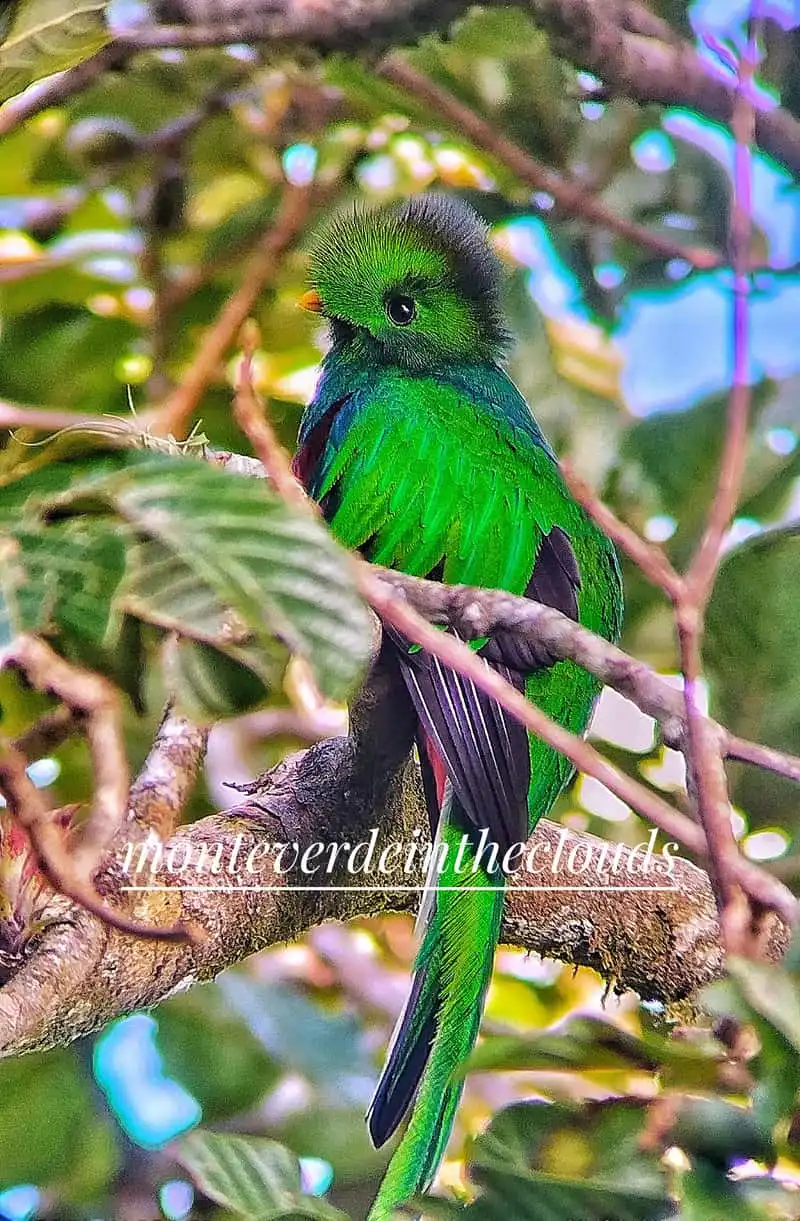
Resplendent quetzals are regularly spotted feeding on laurel trees during nesting season, and the reserve is one of the most reliable spots near Monteverde for the three-wattled bellbird, whose extraordinary call carries through the cloud forest during its mating season. All guided birdwatching tours on this site operate inside or adjacent to Curi-Cancha Reserve.
Quetzals in Monteverde — The Resplendent Quetzal in the Wild
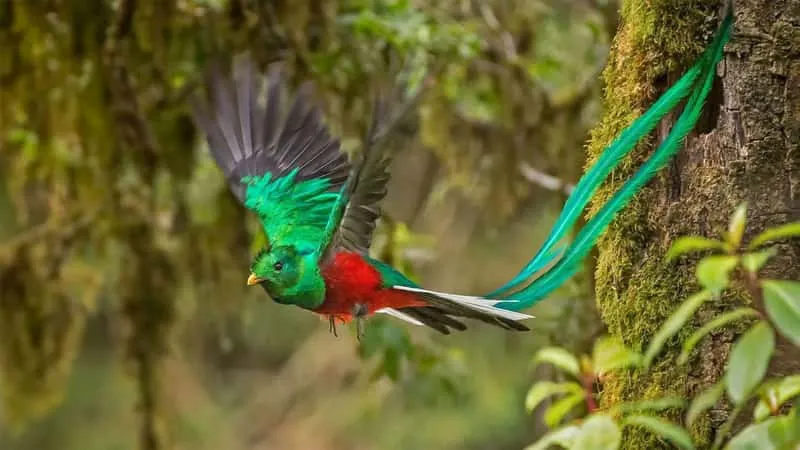
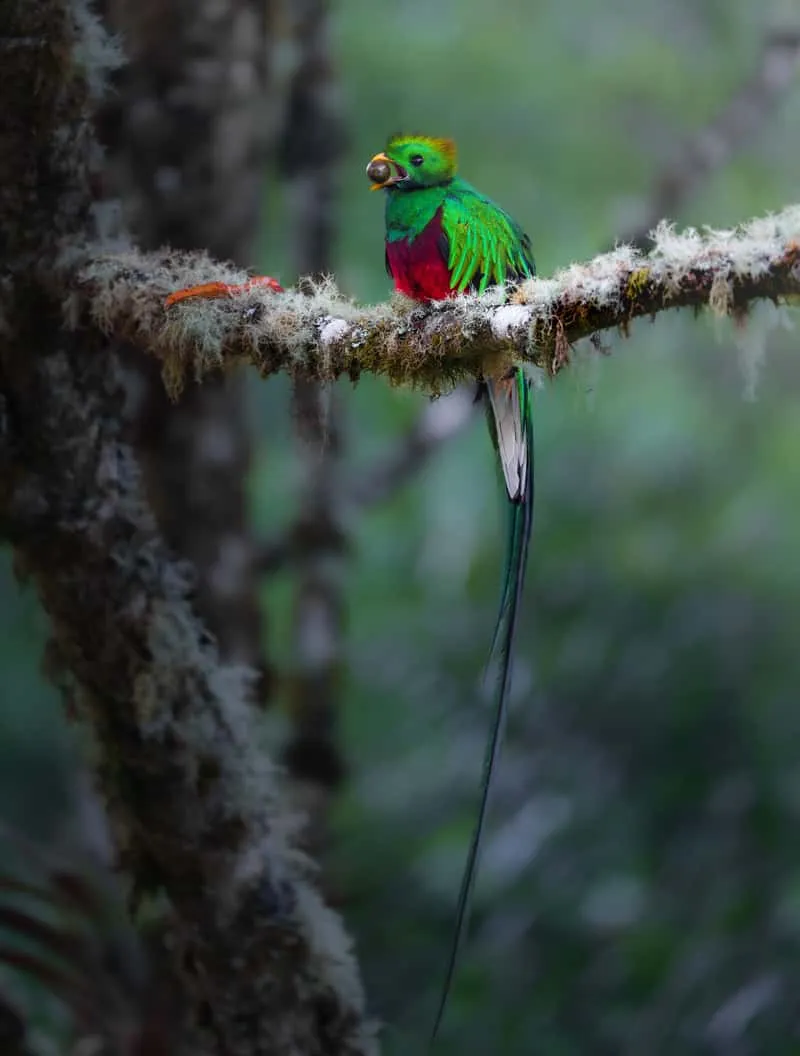
The resplendent quetzal is arguably the most spectacular bird in the Americas — the male sports a vivid emerald and crimson plumage and a tail train that reaches up to three feet in breeding condition that was considered sacred by the ancient Maya and Aztec civilizations. Costa Rica's cloud forests support a healthy quetzal population, and the Monteverde area — particularly Curi-Cancha Reserve — is one of the most reliable places to see them anywhere in their range. Quetzals are present year-round near Monteverde, but the best time to spot them is during their breeding season, which runs March to June, when the birds are most active and visible as they search for the wild avocados and laurel fruits that form the core of their diet.
An expert local guide who knows the reserve well can dramatically increase your chances of a sighting — these birds can be frustratingly cryptic when perched in dense cloud forest canopy, but a naturalist guide with knowledge of birds and their feeding trees knows exactly where to look.
Three-Wattled Bellbird and the Costa Rican Cloud Forest's Key Species
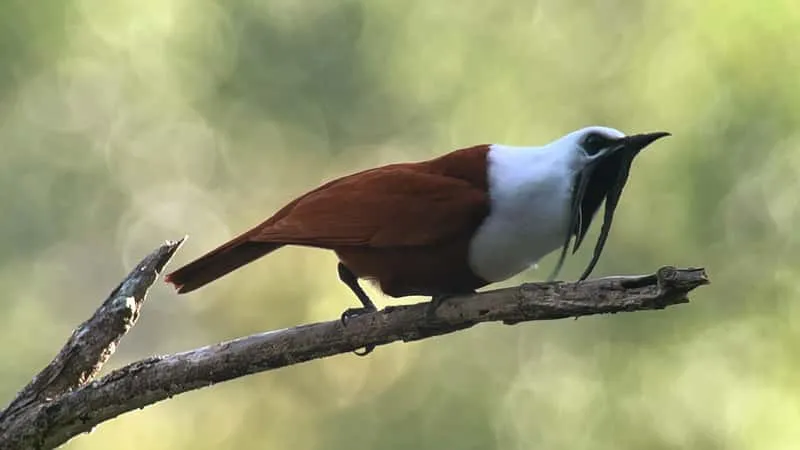
The three-wattled bellbird — or bell bird — is one of the most extraordinary-sounding animals in the rainforest. The male's song, which has been described as a hammered iron sound that carries over a kilometre through the forest canopy, is the acoustic signature of cloud forest in the Monteverde reserve during its mating season from March through July. The bellbird is notoriously difficult to spot despite its extraordinary voice — it perches high in the cloud forest canopy, and only a guide with a spotting scope and deep knowledge of birds' preferred perch sites can reliably deliver views.
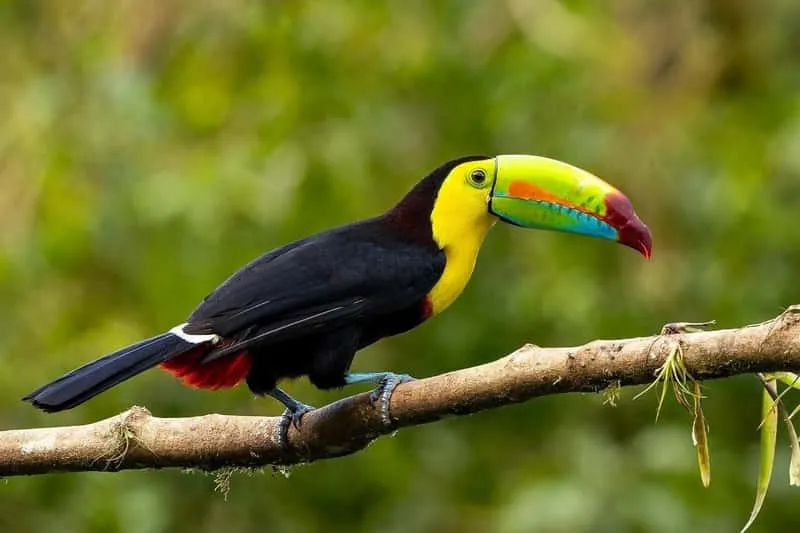
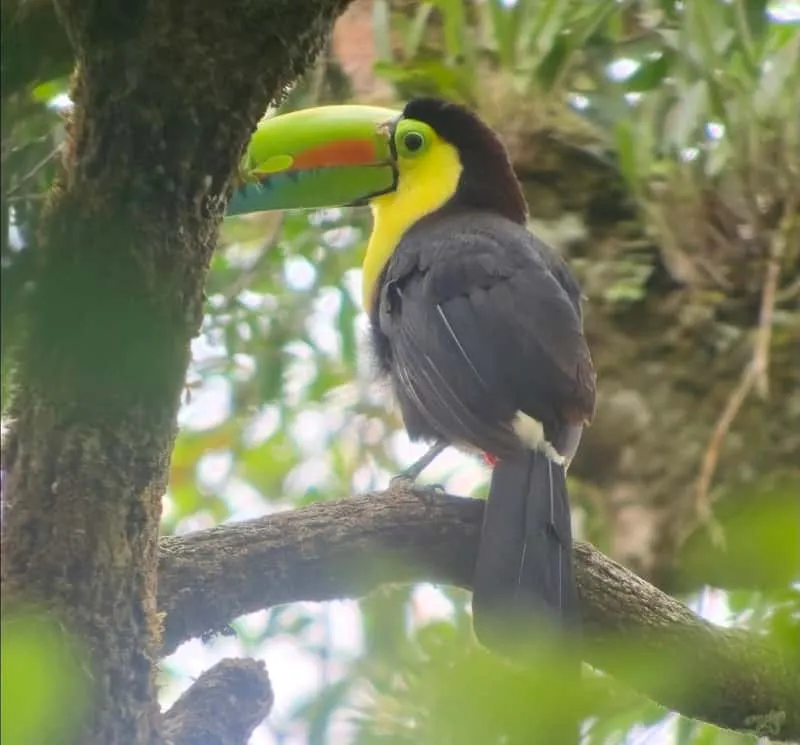
Beyond the bellbird and quetzal, Monteverde's cloud forests are home to the keel-billed toucan, emerald toucanet, scarlet-thighed dacnis, long-tailed silky flycatcher, multiple species of warbler, and an extraordinary array of tanager and hummingbird species. Birder species lists of 50 to 100 species in a single morning are not uncommon for experienced observers working with a skilled local guide.
Night Walk Tours in Monteverde — A Different Birdwatching Experience
A night tour in Monteverde opens a completely different window onto the cloud forest's birds and wildlife. Guided by torchlight along forest trails after dark, a night walk tour reveals owls, nightjars, and potoos perched motionless on branches — birds almost impossible to find during the day. Spectacled owls, mottled owls, and common potoos are among the target species on a Monteverde night walk, alongside non-bird wildlife including sleeping birds, tree frogs, coatis, and occasionally puma tracks.
A night walk tour typically runs 2 to 3 hours and pairs well with a morning birdwatching session for a comprehensive full-day ecotourism experience. Several tours on this site combine morning and night walk tours as a single booking.
What to Bring for a Birdwatching Tour in Monteverde
Monteverde's cloud forest sits at around 1,400 to 1,800 metres elevation and stays cool and misty year-round — even in Costa Rica's dry season, the forest is wet. Dress in layers with a light waterproof jacket. Avoid bright colours; muted greens, browns, and greys help you blend with the forest floor.
Binoculars are included with every birdwatching tour on this site, so you do not need to bring your own — though serious birders are welcome to bring a personal pair for longer viewing distances. Sturdy trail shoes or hiking boots are recommended over sandals, as trails can be muddy and uneven. Bring a small daypack with water and a snack.
An entrance fee is typically included in the tour price for Curi-Cancha; for the Monteverde Cloud Forest Biological Reserve, the $22 park entrance is sometimes additional — check each tour listing. Most importantly, bring patience — cloud forest birdwatching rewards the still and quiet observer.
Best Time for Birdwatching in Monteverde — Month by Month
Monteverde's cloud forest can be visited year-round, but the experience varies significantly by season. The dry season brings peak conditions for quetzal nesting and the clearest trail conditions; the rainy season offers lush vegetation, fewer crowds, and different species activity. Here is a month-by-month breakdown for birdwatchers.
66°JanuaryJan
67°FebruaryFeb
68°MarchMar
68°AprilApr
67°MayMay
66°JuneJun
65°JulyJul
65°AugustAug
65°SeptemberSep
65°OctoberOct
66°NovemberNov
66°DecemberDec
Peak season — dry season, quetzal nesting January–May, trails clear, 50+ species per morning
Three-wattled bellbird at its peak — mating season in full swing, fewer tourists on trails
Rainy season — misty, lush canopy, quetzal migration begins; morning tours still excellent
Transition — migrant species arrive, good species diversity, trails recover from rainy season
Monteverde Birdwatching Map — Reserves & Getting There
What Birdwatchers Say About Their Monteverde Cloud Forest Tour
Our guide had the resplendent quetzal in the scope within 20 minutes of entering Curi-Cancha Reserve. We stood watching it for nearly half an hour. Worth every dollar — and the binoculars provided were excellent quality.
Monteverde: Bird Watching Tour in the Curi-Cancha Reserve
Margaret · United Kingdom
I am not a hardcore birder but I absolutely loved this. Our guide knew the calls of every species we heard before we even saw them. We spotted 34 different species in 2.5 hours including two quetzals and a bellbird. Incredible experience.
Monteverde: Sunrise Bird-Watching Tour in Curi-Cancha
David · United States
The guide took photos of every bird through the spotting scope for us — we left with actual images of the quetzal, not just a memory. That made it so much more special. Highly recommend the photo option.
Birding in Monteverde — Guided Tour with Binoculars & Photos
Annika · Germany
We specifically booked the quetzal tour and were not disappointed. The guide explained the biology, the mating season behaviour, and the conservation story of this remarkable bird. Educational, moving, and visually stunning.
Monteverde Quetzal Birdwatching Tour with Expert Guide
James · Canada
Why Book a Guided Birdwatching Tour in Monteverde
Expert Naturalist Guides
Every guide on these tours has deep local knowledge of birds in Costa Rica — they know the call of every species, the feeding trees where quetzals gather, and the precise perch sites where bellbirds call at dawn.
Binoculars Included
High-quality binoculars are provided on every tour at no extra cost. You do not need to bring your own — though serious birders are welcome to use their preferred personal optics.
Free Cancellation
All tours offer free cancellation up to 24 hours in advance. Weather in Monteverde is unpredictable — your booking is flexible if conditions change.
Spotting Scope & Photo Service
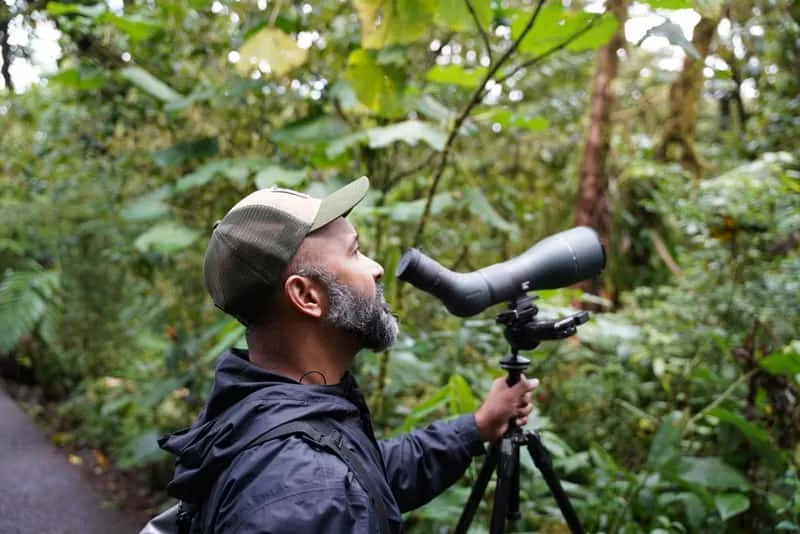
Several tours include a high-powered spotting scope for close views of quetzals, bellbirds, and other canopy species — plus the guide photographs birds through the scope so you leave with professional-quality images.
Small Group Sizes
Small groups mean quiet trails and better sightings. Small groups keep the trail quiet, which matters more in a cloud forest than almost anywhere else.
Access to Restricted Reserves
Curi-Cancha sells self-guided entry at $25 for adults, $15 for ages 5 to 20, from 07:00 to 15:00. These guided tours grant access to the reserve's best birdwatching trails, including areas closed to independent visitors.
Birds and Wildlife You'll See in the Monteverde Cloud Forest
Curi-Cancha Reserve and the Monteverde Cloud Forest Biological Reserve host an extraordinary variety of birds, mammals, amphibians, and insects. A guided birdwatching tour delivers far more than birds alone — your naturalist guide will identify every species you encounter along the trail.
Resplendent Quetzal
Curi-Cancha primary forest — guides locate feeding laurel trees; breeding season March to June
Three-Wattled Bellbird
High canopy perches above forest clearings — most active and vocal March to July, mating season
Keel-Billed Toucan
Cloud forest edge and secondary growth — rainbow bill and raucous call make it an easy spot
Emerald Toucanet
Primary cloud forest mid-canopy — smaller than the toucan, electric green plumage, often in pairs
Hummingbirds
Flowering plants and forest feeders. The violet sabrewing, the largest hummingbird in the region, is on the Preserve's own list
Scarlet-Thighed Dacnis
Upper canopy — vivid blue-and-red male; one of the most photographed birds in the Monteverde area
Long-Tailed Silky-Flycatcher
High primary cloud forest canopy — a Monteverde specialty, reliably spotted on guided tours in Curi-Cancha
Gartered Trogon
Mid-forest perches — slow-moving and often confused with the quetzal; guides use spotting scopes to identify
Wilson's Warbler
Forest undergrowth and edges — North American migrant species present October through March
Coatis — Pizotes
Reserve trail edges — often seen in family groups foraging on the forest floor and around picnic areas
Howler Monkeys
Cloud forest canopy — heard before seen; roars carry across the Monteverde reserve at dawn
Glass Frogs
Stream edges and vegetation near water — transparent bodies visible on leaves during night walk tours
Where to Stay in Monteverde
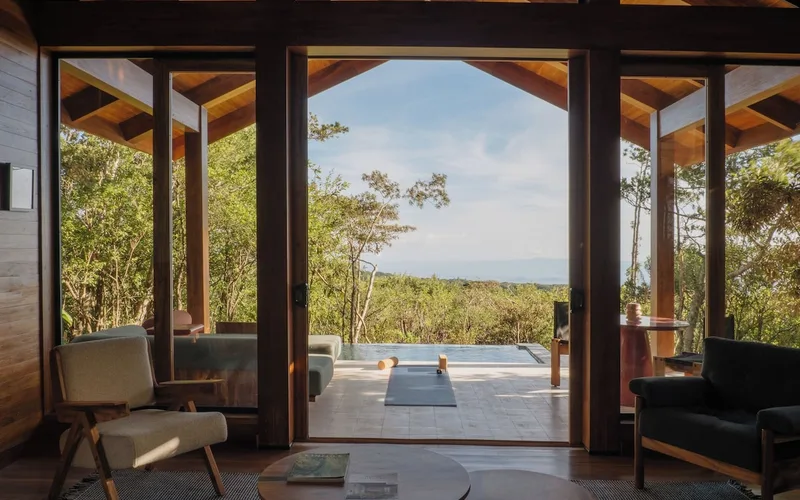
Curi-Cancha tours start at dawn, and the reserve gate is a few minutes from Santa Elena.
Camino Verde Bed & Breakfast
9.4/10
Santa Elena · in town · 1,003 Expedia reviews
The cheapest of these three at $74, and the most-reviewed with 1,003 Expedia reviews
We have not stayed at these places. Guest scores, review counts and nightly rates are what Expedia listed for a midweek night in September 2026, checked on 1 August 2026. Monteverde is small and the good rooms go early in the dry season.
What birds can I see on a birdwatching tour in Monteverde?
The most sought-after bird species in Monteverde are the resplendent quetzal and the three-wattled bellbird — both are cloud forest specialists that require an expert local guide to find reliably. Beyond these headline species, a guided birdwatching tour in Curi-Cancha Reserve typically produces 30 to 60 different species in a single morning, including toucans, toucanets, multiple tanager species, hummingbirds, trogons, warblers, and forest-floor specialists like antpittas and woodcreepers. The scarlet-thighed dacnis, long-tailed silky flycatcher, and emerald toucanet are particularly popular targets. See our full Monteverde cloud forest birds guide for the complete species list.
What is the best time of year for birdwatching in Monteverde?
The dry season from December through April offers the best overall conditions for birdwatching in Monteverde — trails are drier, mornings are clearer, and the quetzal breeding season from March to June means the birds are highly visible and active. However, Monteverde's cloud forest is excellent for birdwatching year-round. The three-wattled bellbird is most active during its mating season from March through July. Migrant species from North America are present from October through March. The wet season (July through October) brings lush vegetation and fewer tourists, making for quieter, more atmospheric birdwatching despite the afternoon rains. See our detailed best time for birdwatching in Monteverde guide for a full month-by-month breakdown.
What is the Curi-Cancha Reserve and why is it special for birdwatching?
Curi-Cancha is a private 83-hectare wildlife refuge adjacent to the town of Monteverde that has built a strong reputation as the best birdwatching spot in the Monteverde area. It is small, 83 hectares with seven kilometres of trail, and the mix of old growth, regenerating forest and open edge makes birds easier to see than they are inside closed primary forest. A guide is optional: the reserve sells self-guided entry at $25 for adults alongside its own guided walks, and every guided morning listed here includes reserve access. Our four reserves compared page sets out the 2026 rates side by side. The quetzal and bellbird sighting rates inside Curi-Cancha consistently outperform other spots in the Monteverde area. Read our full Curi-Cancha Reserve bird watching guide for everything you need to know before visiting.
Do I need to bring binoculars for a birdwatching tour in Monteverde?
No — binoculars are included with every guided birdwatching tour listed on this site. The guides also carry high-powered spotting scopes for views of distant or high-canopy species. If you have your own preferred binoculars, feel free to bring them, but it is not required. Several tours also include a photo service where the guide photographs birds through the scope — so you leave with actual images of the quetzal or bellbird, not just a memory.
How likely am I to see the resplendent quetzal on a Monteverde birdwatching tour?
A guided birdwatching tour inside Curi-Cancha Reserve gives you the best odds of any birdwatching experience in Costa Rica. Quetzals are present in the Monteverde cloud forest year-round, but are most reliably spotted during breeding season, which runs March to June when they are actively feeding on laurel fruits and visiting nest cavities. Guides who know the reserve well have a very high success rate during this period. Outside nesting season, quetzals are still present but require more patience and expert knowledge to locate. Read our full review of the resplendent quetzal birdwatching tour in Monteverde for everything to expect.
Can I go birdwatching in Monteverde without a guide?
You can walk the trails of the Monteverde Cloud Forest Biological Reserve or Santa Elena Cloud Forest Reserve independently — the Preserve prices each timed slot in its own booking window, and Santa Elena charges ₡10,000 for adults, about $22 at ₡452 to the dollar in August 2026. Curi-Cancha does the same, at $25 for adults from 07:00 to 15:00. What you give up going in alone is the ear and the scope: a specialist guide finds most birds by call before anyone sees them. A naturalist guide knows the calls, the feeding trees and the perches, and most visitors report a far longer list than they manage alone. Our honest read on both options is in do you need a guide.
How is Curi-Cancha Reserve different from the Monteverde Cloud Forest Biological Reserve?
Both reserves protect high-elevation cloud forest in the Monteverde area, but they differ in size, access, and character. The Monteverde Cloud Forest Biological Reserve is the flagship — over 10,000 acres, about 4,100 hectares, of protected cloud forest managed by the Tropical Science Center, with hanging bridges, a variety of marked trails, and the option to visit with or without a guide. Curi-Cancha Reserve is smaller at 83 hectares, privately managed, and it sells both self-guided entry and guided walks. Curi-Cancha is generally preferred by serious birders for its lower visitor numbers and more productive quetzal and bellbird sightings. Santa Elena Cloud Forest Reserve is a third option: community-managed, 12 kilometres of trails, quieter, and cheaper at ₡10,000 for adults, about $22.
Is a private tour worth it for birdwatching in Monteverde?
A private tour with an expert local guide is strongly recommended for serious birders and wildlife photographers. A private guide can adjust pace, spending extra time at productive perch sites, setting up scope views, and tailoring the route to your target species list. The per-person cost of a private birdwatching tour in Monteverde is higher ($85–$90) but the experience — and species count — is typically far superior to joining a group. For small groups of two or more travelers, a private tour represents excellent value.
What should I wear for a birdwatching tour in Monteverde?
Dress for cool, wet conditions even in the dry season. The cloud forest sits at 1,400 to 1,800 metres elevation and stays between 16°C and 24°C (60°F to 75°F) year-round. Wear muted colours — green, grey, or khaki — to avoid startling birds. Layers are essential: start with a light base layer, add a fleece or thermal, and carry a waterproof outer layer. Wear sturdy closed-toe shoes or light hiking boots — trails can be muddy and slippery. Avoid perfume or strongly scented sunscreen, which can disturb wildlife. The early morning start means temperatures feel colder than midday — bring gloves if you run cold.
What is the difference between a morning and an afternoon birdwatching tour in Monteverde?
Morning tours — starting between 6:00 am and 7:30 am — are far superior for birdwatching in Monteverde. Birds are most active at dawn: feeding, singing, and moving through the canopy in their highest numbers. The quetzal and bellbird are both most visible in the first two hours after sunrise. Afternoon activity drops significantly as birds rest and retreat to the forest interior. Sunrise birdwatching tours in Curi-Cancha are the most popular option for exactly this reason. If you are choosing between a morning and afternoon tour, always choose morning.
Is a La Fortuna birdwatching tour different from a Monteverde tour?
Yes — significantly so. La Fortuna sits at low elevation near Arenal Volcano and protects a completely different ecosystem: lowland tropical rainforest and secondary forest rather than cloud forest. While La Fortuna and the wider Arenal region is home to an estimated 840+ bird species, the cloud forest specialist species — quetzal, bellbird, long-tailed silky flycatcher — are not found there. La Fortuna excels for lowland tropical birds such as toucans at close range, great green macaws, and an extraordinary array of heron and kingfisher species along the Río Peñas Blancas. A combined Monteverde plus La Fortuna itinerary covers two completely different ecosystems and is the ideal approach for a serious birding trip to Costa Rica.
Is the Santa Elena Cloud Forest Reserve good for birdwatching?
The Santa Elena Cloud Forest Reserve is an excellent and underappreciated birdwatching destination in the Monteverde area. Managed by a local community cooperative, it runs 12 kilometres of trail through primary and secondary cloud forest on the slopes above Santa Elena town, with an observation tower and an orchid garden included in the ticket. Bird species here overlap significantly with those in the Monteverde Cloud Forest Biological Reserve: quetzals, bellbirds, hummingbirds, and tanagers all occur in Santa Elena cloud forest habitat. The reserve tends to be quieter and less crowded than its more famous neighbour, making it an attractive option for a peaceful early-morning guided nature walk. For dedicated birdwatchers who want to cover as many spots in the Monteverde area as possible, pairing a Curi-Cancha tour with a visit to Santa Elena is an excellent strategy. Read our full Santa Elena cloud forest birdwatching guide for what to expect.
Where should I stay for birdwatching in Monteverde?
Stay in or just outside Santa Elena: the Curi-Cancha gate is a few minutes away and the tours start between 6:00 and 7:30am, which is not a drive you want to make from La Fortuna or the coast. Expedia guests rate the lodges here 9.4/10 and better, with rooms from around $74 a night. See three of the best-reviewed in where to stay in Monteverde.
Which Monteverde reserve is best for birdwatching?
Curi-Cancha is the one most birders pick, and the reason is structure rather than reputation: 83 hectares, seven kilometres of trail between 1,450 and 1,615 metres, and a mix of old growth, regenerating forest and open edge that is far easier to see into than closed primary forest. The Cloud Forest Preserve is the bigger, wilder walk with its hanging bridge and Continental Divide viewpoints, Santa Elena is the quiet, cheaper option at ₡10,000 for adults, about $22, and Bajo del Tigre in the Children's Eternal Rainforest sits lower and drier with a partly different species list. We set the 2026 fees, hours and guide rules side by side in Monteverde's four reserves compared.
Should you hire a guide or walk the reserves on your own?
Both work, and nobody is forced into a guide: every reserve here sells self-guided entry, Curi-Cancha at $25 for adults. What a guide buys is the ear and the scope. A specialist birding guide picks a bellbird or a quetzal out of the canopy by call long before it is visible, and the guided mornings compared on this site run from $40 with binoculars included, which is below the reserve's own specialist birding rate of $125. The honest case for each is in do you need a guide.
What should you bring birdwatching in the Monteverde cloud forest?
Curi-Cancha's own list is closed comfortable shoes, long trousers, water, insect repellent, sunscreen and a waterproof jacket, plus photo ID, because every visitor signs a liability form at reception before entering. Binoculars come with the guided mornings here and the guides carry a spotting scope, so personal optics are optional. Humidity above 90% is normal, so a cloth for fogged lenses earns its place. Full kit list in what to bring.
How do you get to Monteverde in time for a dawn start?
You sleep in Santa Elena the night before. The specialist Curi-Cancha birding tour leaves at 6:30 and the reserve gates open at 07:00, so no bus, shuttle or drive from San José or La Fortuna gets you there in time on the same morning. Route 606 up from the Pan-American Highway is paved into town, and the reserve gates sit within a few minutes of Santa Elena. Routes, drive times and gate logistics are in getting to Monteverde.
Book your Monteverde birdwatching tour — quetzals, bellbirds, and cloud forest await.
All tours include binoculars and free cancellation. Reserve your spot today.
 from $72