Resplendent Quetzal Birdwatching Tour in Monteverde — See the Quetzal in the Wild
The resplendent quetzal is the most spectacular bird in the Americas — and Monteverde's cloud forest is one of the most reliable places on earth to find it. This dedicated quetzal birdwatching tour in Monteverde takes you inside Curi-Cancha Reserve with an expert local guide who has spent years mapping the laurel trees where quetzals feed and the nesting cavities they return to every season. Browse all bird watching tours in Monteverde we cover — from 2.5-hour quetzal searches to full 5-hour cloud forest expeditions.
About This Activity
Up to 24h in advance — full refund
Morning session, early start recommended
Expert guide + binoculars included
Knows feeding trees and nesting sites
See the quetzal's tail in detail
Consistent quetzal sightings reported
Check Live Availability & Prices
Real-time dates and prices — free cancellation up to 24 hours before.
Why This Quetzal Tour Stands Out
A Guide Who Knows Where the Quetzal Feeds
Finding the resplendent quetzal without a guide is extremely difficult. The bird is cryptic — its shimmering green plumage blends almost perfectly with the cloud forest canopy, and it can sit motionless for long periods in the mid-canopy without drawing attention. A specialist guide who has spent years inside Curi-Cancha Reserve changes everything.
They know which laurel trees are fruiting, which cavities have active nests, and at what time of day the quetzals are most likely to be active in each part of the reserve.
- Guide locates quetzals by their calls and knowledge of feeding routes
- Spotting scope positioned for clear, close views of the tail plumage
- Tips on photographing the quetzal without disturbing it
- Multiple reliable locations covered in a single 2.5-hour walk
Curi-Cancha Reserve — Monteverde's Most Productive Quetzal Habitat
Curi-Cancha is a private 83-hectare wildlife refuge close to the Monteverde Cloud Forest Preserve, with seven kilometres of trail between 1,450 and 1,615 metres. The reserve's mix of primary cloud forest and regenerating secondary growth creates a mosaic of habitat that supports a particularly high density of quetzals during nesting season. The reserve entrance opens at dawn, and early morning is when quetzal activity peaks.
What You'll See — Quetzal and Cloud Forest Birds
The Resplendent Quetzal — What to Expect
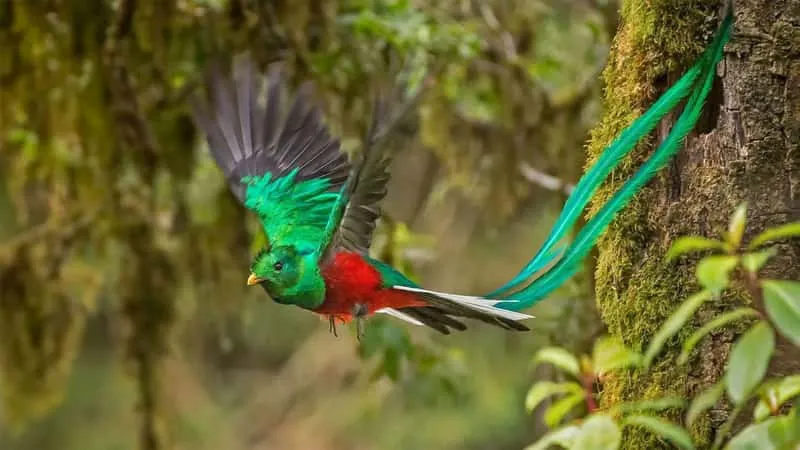
The male resplendent quetzal in full breeding plumage is one of the great sights in the Americas. The body is emerald green and crimson red; the tail train, in breeding condition, reaches up to about three feet and billows as the bird flies. Females are slightly less vivid but equally striking in the cloud forest light.
Quetzals feed primarily on small wild avocados (aguacatillos) and laurel fruits — the guide will position the scope on the feeding tree before the bird arrives, meaning you often see the quetzal settle in rather than arriving to find it already there.
- Male tail train: up to three feet in breeding condition, March to June
- Vivid emerald back and crimson breast — unmistakable when scope is on target
- Female: duller green with a shorter red and bronze tail
- Feed on laurel family fruits — guides target fruiting trees first
- Flight call: a loud, melodious whistle repeated in series
Other Cloud Forest Birds You'll Spot
A 2.5-hour walk in Curi-Cancha typically produces 20 to 40 species beyond the quetzal. The cloud forest is rich with tanagers, trogons, hummingbirds, and warblers — all of which the guide will identify and point out while searching for the quetzal.
- Three-wattled bellbird — listen for the extraordinary hammering call
- Emerald toucanet — bright green, smaller than the keel-billed toucan
- Purple-throated mountain-gem and fiery-throated hummingbird
- Spangle-cheeked and silver-throated tanager in forest clearings
- Gartered trogon — often mistaken for the quetzal by new birdwatchers
What's Included, What to Bring, What's Not Allowed
What's Included
- Expert English-speaking guide with specialist quetzal knowledge
- Binoculars for the duration of the tour
- Spotting scope for close views of the quetzal and other species
- Species identification support throughout the walk
- Free cancellation up to 24 hours before
Not Included
- Curi-Cancha Reserve entrance fee (paid separately at the gate — approx. $15)
- Transport to the reserve (ask your guide or hotel for options)
- Meals and snacks
- Gratuity for your guide (customary — $5 to $10 per person)
What to Bring
- Camera with a zoom lens of at least 200mm for quetzal photography
- Light rain jacket — the cloud forest receives mist and light rain year-round
- Comfortable walking shoes or light hiking boots (trails are maintained)
- Water (at least 1 litre per person)
- Insect repellent
- Layered clothing — Monteverde's cloud forest can be cool even in dry season
Not Allowed
- Flash photography — disturbs birds and is prohibited in the reserve
- Loud talking or noise on the forest trails
- Leaving marked trails or approaching wildlife without guide direction
- Bringing pets into the reserve
What Happens on the Quetzal Tour — Step by Step
-
06:00–06:30
Meet your guide
Meet at the agreed location near Curi-Cancha Reserve. Early starts increase quetzal activity — your guide will confirm the meeting point when you book.
-
06:30–07:00
Enter Curi-Cancha Reserve
Pay the entrance fee at the gate and begin the walk. Your guide explains what to listen and look for before entering the primary forest section.
-
07:00–08:00
Primary forest walk — quetzal search
The guide checks known feeding trees and listens for quetzal calls. The scope is set up at the first reliable perch location. In the March to June breeding season the guide often has a bird in the scope inside the first 45 minutes.
-
08:00–08:45
Cloud forest birding — other species
After locating the quetzal, the tour continues for trogons, tanagers, bellbirds, and hummingbirds. The guide uses the scope for all difficult identifications.
-
08:45–09:00
Exit and debrief
Exit the reserve and review the species list with your guide. The guide provides photo identification tips and suggestions for additional birding in the Monteverde area.
Important Things to Know Before You Book
Best Time of Year for Quetzal Sightings
Quetzals are hardest to miss during the March to June breeding season, and they move downslope afterwards, so sightings thin out later in the year. During nesting season, males display their full tail plumage and are actively feeding to provision the nest — making them more predictable in location and more visible. The peak of the peak is December through April, when the dry season brings clearer mornings and the quetzals are at their most active.
What Happens If You Don't See a Quetzal
Quetzal sightings on this tour are reported consistently, particularly from March to June. Outside the breeding months the birds move downslope and sightings get less predictable, so the guide will adjust the route to maximize your chances. If conditions are genuinely poor (heavy rain, poor visibility), your guide will advise whether to proceed or reschedule.
Free cancellation applies up to 24 hours before the tour.
Timing matters more than luck with this bird. Quetzals breed in Costa Rica from March to June, with February and July as the edges, and they move downslope once breeding ends, which is why sightings thin out later in the year. The month-by-month picture is in our best time for birdwatching in Monteverde guide, and the reserve choice behind it in the four reserves compared.
Location: Curi-Cancha Reserve, Monteverde, Costa Rica
Who This Tour Is For
Perfect For
- Birdwatchers whose primary goal is seeing the resplendent quetzal in the wild
- Photographers wanting expert guidance for quetzal shots — the guide knows perch locations
- First-time visitors to Monteverde wanting the single most memorable wildlife encounter
- Couples or solo travelers who want a quiet, intimate forest experience with a specialist guide
Not Suitable For
- Visitors unable to walk on unpaved forest trails for 2–2.5 hours
- Those who want a comprehensive multi-species count over a half-day (see the 5-hour tour instead)
- Young children under 6 who may struggle with the walking pace and early start
- Anyone who cannot tolerate moderate humidity and occasional mist
Quetzal Birdwatching Tour — FAQ
Is a quetzal sighting guaranteed on this tour?
No tour can guarantee specific wildlife sightings, but this is one of the most reliable quetzal tours in Monteverde. The guide knows Curi-Cancha Reserve well and targets known feeding and perch locations. During the March to June breeding season, most reviewers report a sighting. Outside that season, quetzals are still present but slightly less predictable.
What is the best time of day to spot the resplendent quetzal?
Early morning — from first light until about 9am — is when quetzals are most active and visible. They feed on aguacatillo fruits in the early hours before retreating deeper into the canopy. This is why the tour starts at or before 6:30am. Arriving in Monteverde the evening before is strongly recommended so you can make the early start without rushing.
Do I need to bring binoculars?
No — binoculars are provided as part of the tour. The guide also brings a spotting scope, which is essential for viewing the quetzal's full tail detail in the forest canopy. If you have your own binoculars of 8x42 or greater magnification, bring them as a supplement.
Is this tour suitable for non-birders?
Absolutely. Many guests on this tour are first-time birdwatchers who specifically want to see the quetzal. The guide explains the bird's biology, ecology, and cultural significance throughout the walk — the experience is as much about understanding the cloud forest as counting species. The quetzal's visual impact alone makes it memorable even for those with no prior birdwatching interest.
What if it's raining heavily on the day of the tour?
Light rain and mist are normal in Monteverde's cloud forest and do not significantly affect birding. A light jacket is all that's needed. Heavy rain is rare in the morning but does occasionally occur — if conditions are severe enough to affect the tour quality, your guide will discuss options. Free cancellation applies up to 24 hours in advance.
What Travelers Say About the Quetzal Birdwatching Tour
Our guide had the quetzal in the spotting scope within 20 minutes of entering the reserve. We watched it for nearly 30 minutes — the tail is even more incredible in real life than in any photograph. Worth every penny and more.
I've been birdwatching for 15 years and this was one of the top three wildlife moments of my life. The guide knew exactly where to look and had the scope set up on the quetzal's perch before the bird even landed. Extraordinary.
Neither of us had birdwatched seriously before but we wanted to see the quetzal. The guide made it easy, explained everything, and we ended up seeing two quetzals plus a bellbird. The tour completely exceeded our expectations.